
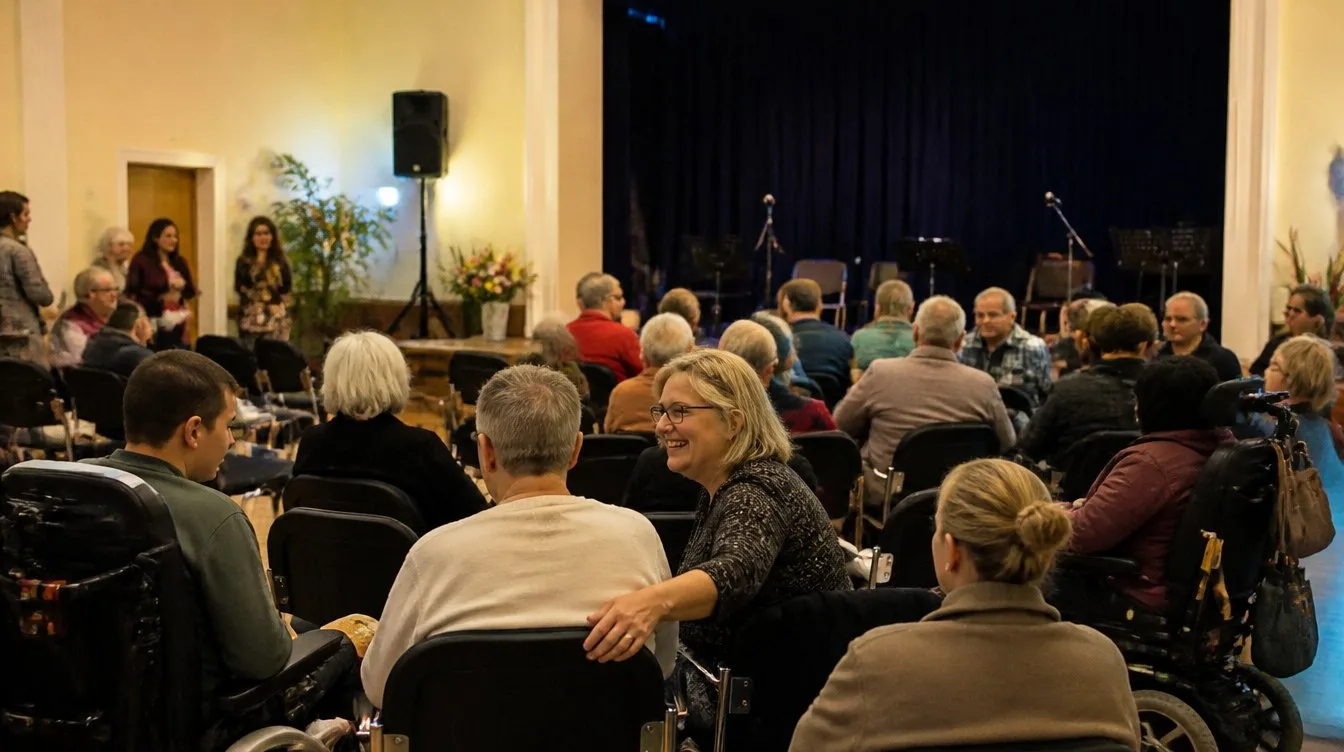
Independent living is both a philosophy and a network of services. The philosophy, born in Berkeley, California in the early 1970s, says that people with disabilities are the experts on their own needs and should control the services they receive. The network is the roughly four hundred Centers for Independent Living (CILs) across the United States, plus similar organisations in Canada, the United Kingdom and elsewhere.
What a center does
Federal law requires every CIL to offer five core services: information and referral, independent living skills training, peer counselling, individual and systems advocacy, and transition support. Transition support covers young people leaving school, people moving out of nursing homes or institutions, and people at risk of entering one. Centers are non-residential; they do not run housing but help people find and keep it. Most also help with benefits applications, assistive technology, personal assistance services and accessible transport.
Who runs them and who pays
By law a majority of a center’s board and staff must be people with disabilities. Funding comes from Title VII of the Rehabilitation Act through the Administration for Community Living, supplemented by state money and grants. Services are free. Each state also has a Statewide Independent Living Council that writes the state plan.
Finding a center
The Independent Living Research Utilization (ILRU) programme in Houston maintains the national directory of centers, searchable by state and county. The National Council on Independent Living (NCIL) is the membership organisation and the political voice of the movement. In the UK the comparable bodies are the disabled people’s organisations listed by Disability Rights UK; in Canada, Independent Living Canada links the provincial centers.
Why it matters
The 1999 Supreme Court decision in Olmstead v. L.C. held that unnecessary institutionalisation is discrimination under the Americans with Disabilities Act. Centers for Independent Living are the practical machinery that makes community living possible: they find the apartment, arrange the personal assistant and teach the skills. Waiting lists for home and community-based services remain long in many states, which is why systems advocacy is one of the five core services.